Showing posts with label Catholic blogs. Show all posts

Friday, March 22, 2019

+1 in celebration of Google +

Google will eliminate its Google + social media platform on April 2, 2019.

The under-used platform never came close to competing with Facebook as a social media to MySpace (which, interestingly enough, still survives, albeit known only when it inadvertently erases almost a decade of material).  Google + became something of a joke as Facebook, then Twitter, then Instagram, then SnapChat rocketed in popularity.

Image result for google plus
source: searchengineland.com

No, for everything Google has done right, Google + faltered.

Since it's going away forever, though, a certain celebration seems in order.  Google + might have been awkward and largely unknown, but it was not without its own virtues.  Unlike Facebook or Twitter, you could participate in different degrees in a wide variety of online groups.  Obviously, religion is one example. As this blog started in 2012, I found several, not just one, audiences on Google+.  Many of the 2012-2015 posts appeared simultaneously on the "Catholic Blogs," "Roman Catholics," "Living the Catholic Faith," and occasionally "Theology of the Body" groups.  The G+ Catholic Blogs even had a Twitter handle (no longer active). On any given day posts on these groups might range from the overly wordy and wonky like my own to mainstream/leaning conservative spirituality to frankly sympathetic sedevacantism or equally unapologetic left-wing beads-n-sandals Catholics.  And those were just the Catholics.  There were evangelical Protestants of all sorts, Hindus, Buddhists, progressive politics, and conservatives who revered Steve Bannon. Also, unlike the more popular platforms, it seemed easier to connect with earnest international Catholic participants.  Google + seemed to be a gateway platform where many gained their sea legs before moving to the more popular ones.
Perhaps because so few comparatively used the platform, Google + was never monitored as Facebook and Twitter justifiably have been.  At any rate, a certain diversity of voices existed among Catholic use of Google +, much like what exists on #CatholicTwitter today.

Friday, October 7, 2016

Paging Julian Felsenburgh

Blogger note:  Just recently this blog took on discrepancies between Tim Kaine's political stances and his affirmation of his Catholic faith.  This post, working from material composed earlier this year, provides balance with a critical view of the Trump campaign.

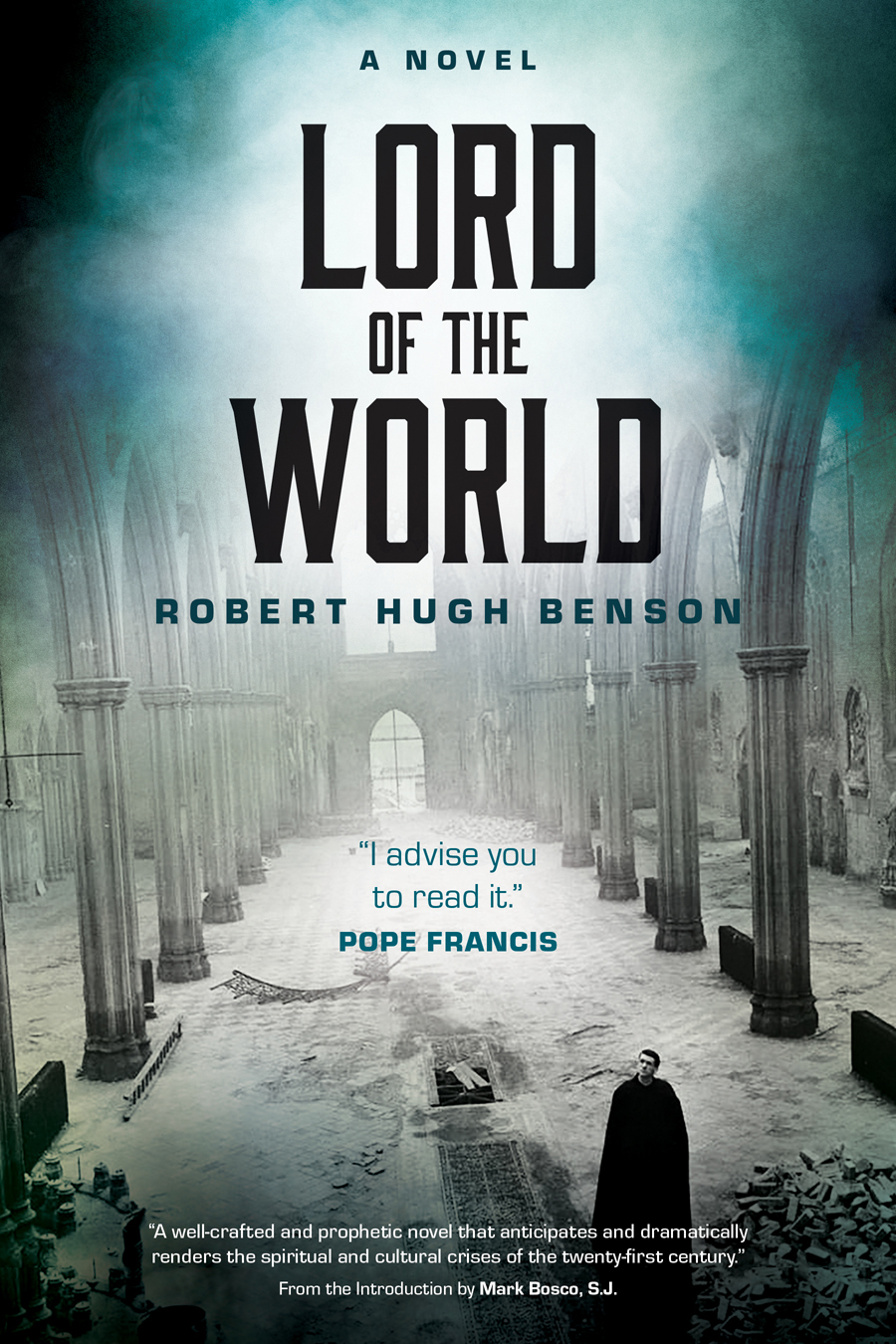
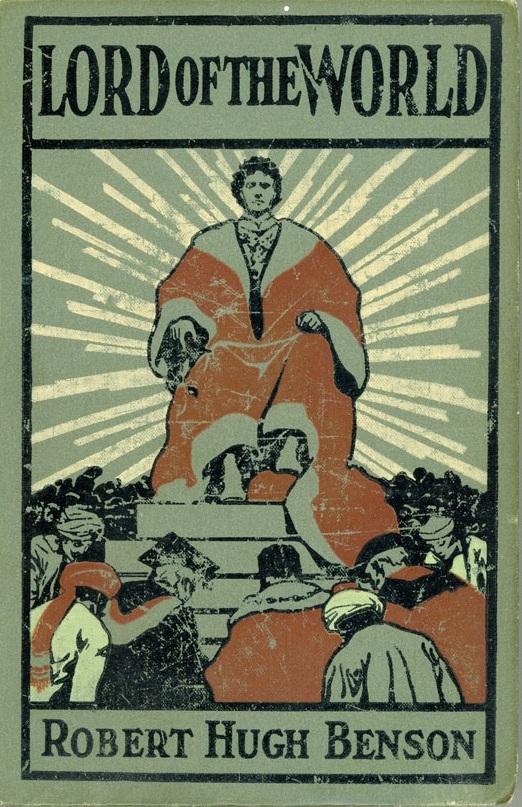
Robert Hughes Benson's Lord of the World.  Folks, you need to read this book.  It matters not that the book was published in 1907, the same year as St. Pius X's Pascendi, five years before the Titanic sank, seven years before Gavrilo Princip shot Archduke Ferdinand, thirty-two years before Hitler invaded Poland.  The novel features euthanasia, the loss of religious liberty, anti-Catholicism (because they're two different things), globalization, total war, martyrdom, demagoguery, and the miraculous.

Bradley Birzer, author of illuminating studies of Christopher Dawson and Tolkien, earlier this year  posted this brief article at The Imaginative Conservative.   I myself was reminded about Benson and this particular novel by this Crux article by John Allen, Jr.  Both Benedict XVI and Francis have recommended the book.  Benson (1868-1914), whose father had been Archbishop of Canterbury, was a celebrity convert and priest.  Once quite popular among English-reading Catholics, his reputation has vanished since the Second Vatican Council.


Lord of the World follows the parallel trajectories of Father Percy and his doppelganger, Julian Felsenburgh, a senator from Vermont (no, I am not making that up) who is clearly the anti-Christ.  Secularism has pushed all religion to the fringes as the masses chose instead this world's pleasures (euthanasia and what amounts to physician-assisted suicide are readily available).  Only Rome the city itself resists as it has, through international treaty, become the sole earthly haven for Catholics.  Martyrdom awaits any Catholic who dares declare the Faith openly.  Meanwhile a worship of divinized earthly powers spreads like wildfire.  Amassing this new awakening, and yet remaining above it all, stands Julian Felsenburgh.  Traveling across the world at record speeds, Felsenburgh successfully unites the entire planet, save Rome, under one government.   Meanwhile, Father Percy sees his clerical friends lose their faith and the Church lose even what little it retains on earth.  The impending victory of Felsenburgh's atheist materialism seems complete.  The conclusion, though, must be read all the way to its very last words.  No spoilers here.
(Pic credits:  Ave Maria Press & Wikipedia)

Thursday, April 7, 2016

You Are My Sunshine


Two great Google+ friends, +Lisa OFS and +Deacon Scott Dodge, routinely post great music clips.  Here's one from Chris and Morgane Stapleton, taking a new look at an old country music.

Wednesday, December 9, 2015

Quo Vadis?

Post title references Rome's Basilica di San Sebastiano and the nearby Quo Vadis chapel and this early Christian story about St. Peter meeting Jesus, post-Resurrection, just outside Rome.  The Basilica and church feature Christ's footprints captured in the stones he walked over to Rome itself.


But it refers to a question, posed rather directly, from a good friend this past July over dinner near Standish, Maine:  "Just who do you want to reach with that blog?"

Well, everybody, pretty much.

Except we all know it's not that easy.  First, St. Paul's argument notwithstanding, none of us can be all things to all people.  To the extent that any of us are is a gift from the Holy Spirit.  (Side comment: OK, Bishop Robert Barron comes awfully darned close.  There are others, too, such as Father Donio's Catholic Apostolate Center.)  Certain blogs will catch readers and audiences that others just miss.  That in itself is fine, insofar that the diversity of (Catholic) blogs all  intend the same end:  the building of the Kingdom, through the Church, here on earth. So, Artur Sebastian Rosman takes one approach, Deacon Scott Dodge takes another, while Elizabeth Duffy, Amy Welborn, and Elizabeth Reardon each take their own.  #allgood  #therearesomanyothers

So where's Spiritual Diabetes?

Certainly in an academic vein of the Catholic blogosphere, but one attuned to trends outside the Academy's walls as well.  Popular culture, popular spiritual trends, and politics all appear, but part of what generates this blog comes from the admittedly rarefied air of Catholic theological studies and, this is crucial, my particular location therein.  Other posts have addressed my conversion experiences and my own views on Catholic higher education.  Animating those posts, though, is the theme of spiritual hunger, satisfaction, and overconsumption.  That is, after all, how one contracts Type II diabetes--you eat your way into it.  At some point, and this determining factor differs for each individual, one's consumption outstrips the body's own abilities to process and burn sugar. The diabetic, once diagnosed, knows darned well what the stakes are and reduces consumption, but then it's too late. Thereafter, the bloodstream courses with more and more sugar, which causes both thirst and more hunger.  Increased high blood sugar leads to circulatory and tissue breakdown, hence the association of diabetes with blindness, loss of mobility, and even loss of limbs.

The reality that the United States faces, and has faced for almost two decades, a Type II diabetes epidemic seems an apt portal or theme for addressing similar questions of spiritual overconsumption.  As stated in one of my earliest posts, originally I saw this theme as a means to address spiritual overconsumption on what might be called "the right" politically and socially-speaking in the United States.  Almost three years of blogging has led me to conclude, though, that spiritual diabetes flourishes just as strongly on the Left.  (Although at times I have used the phrase "spiritual veganism" to address that side.  I do need a couple more posts to explore further that relationship.)

Recently a tectonic shift in Catholic blogging occurred when Elizabeth Scalia "The Anchoress," longtime portal editor of Patheos' Catholic channel, moved her work to Aleteia.  Katrina Fernandez, a fiery convert and blogger who works in North Carolina, subsequently announced the end of her blog "The Crescat," and Max Lindemann has toyed with doing the same at his "Diary of a Wimpy Catholic."  No blog runs forever, and perhaps we Catholic bloggers should know of and work with that realization more so than we and more so than blogs of other faiths (and no faith at all).  Don't worry, this isn't a resignation post--I'm not going anywhere just yet.  That being said, for all the refreshing, inspiring, and challenging voices within the Catholic blogosphere, it bears repeating that the Catholic social media presence--as diverse as it is--must never be mistaken for the Church.  Only there--and not here--may we discover (repeatedly!) the authentic remedies for spiritual diabetes.