
Well, lots, actually.
There's a justice issue: adjunct faculty provide more than fifty percent of all instruction in American higher education yet receive exponentially less pay and benefits. The increased profit margin--get the same instruction for far less money--insures institutions will not break their reliance on adjuncts easily or willingly. See, for example, this satire here. Let's be clear: sometimes the line dividing full-time from adjunct faculty does involve ability. Faculty searches are structured, supposedly, to return the best qualified candidate given the institution's parameters. So, even when institutions seek to fill faculty lines according to categories like race/class/gender, the faculty search is supposed to result in the hiring of the best-qualified person fitting those parameters. That is an important issue. It is also important, I think, to acknowledge that institutional bias--where'd you get your degree?--and perspective bias--do you think like us?--exert real influence on faculty searches. Not every single one, obviously, but those factors do exist.
Students do not benefit, either. As reliance on adjunct increases, first-year students take increasingly more courses with adjunct faculty. Full-time faculty--the ones who've made it through the extended hiring process--actually teach fewer students. More and more, adjunct faculty are the first "teachers" students see, and this experience occurs precisely in the foundational courses institutions and major-granting department insist are so important. In other words, precisely where and when students need quality instruction, they are least likely to obtain it. The result of all this is that student retention sags.
Why keep taking classes when they're all like this?
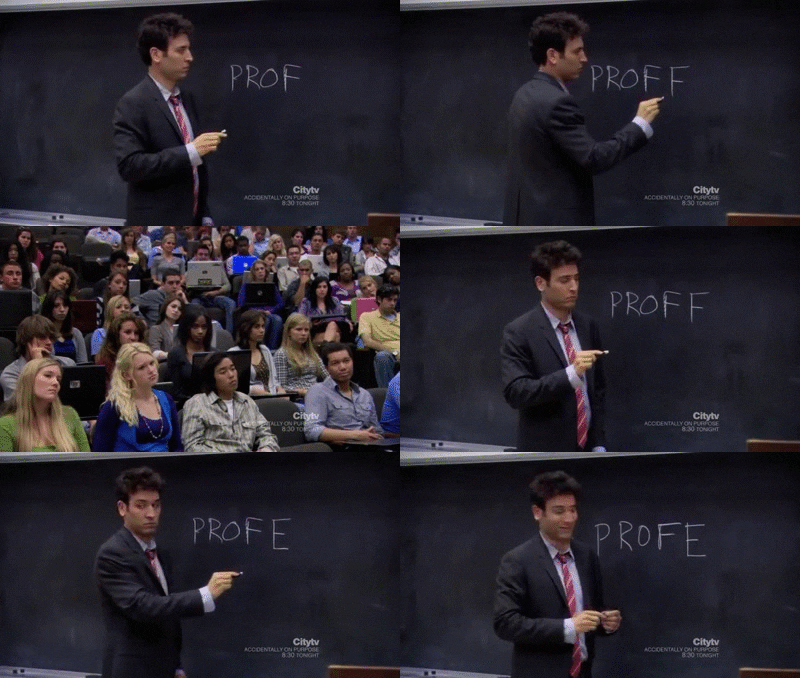
source: Giphy
I have taught long enough to know that could be anybody, full-time tenure-track or adjunct faculty. But the student array--all jammed into an anonymous lecture hall, wondering what the point is--is quite accurate.


